The AI Receptionist Disclaimer Trap: Why Missing Disclosures Could Cost You Thousands
April 21, 2026
If you deploy an AI receptionist on your business phone line today, there is a quiet legal trap waiting for you - one that most vendors will never warn you about. They simply hand you the keys, take your subscription fee, and let you walk into it.
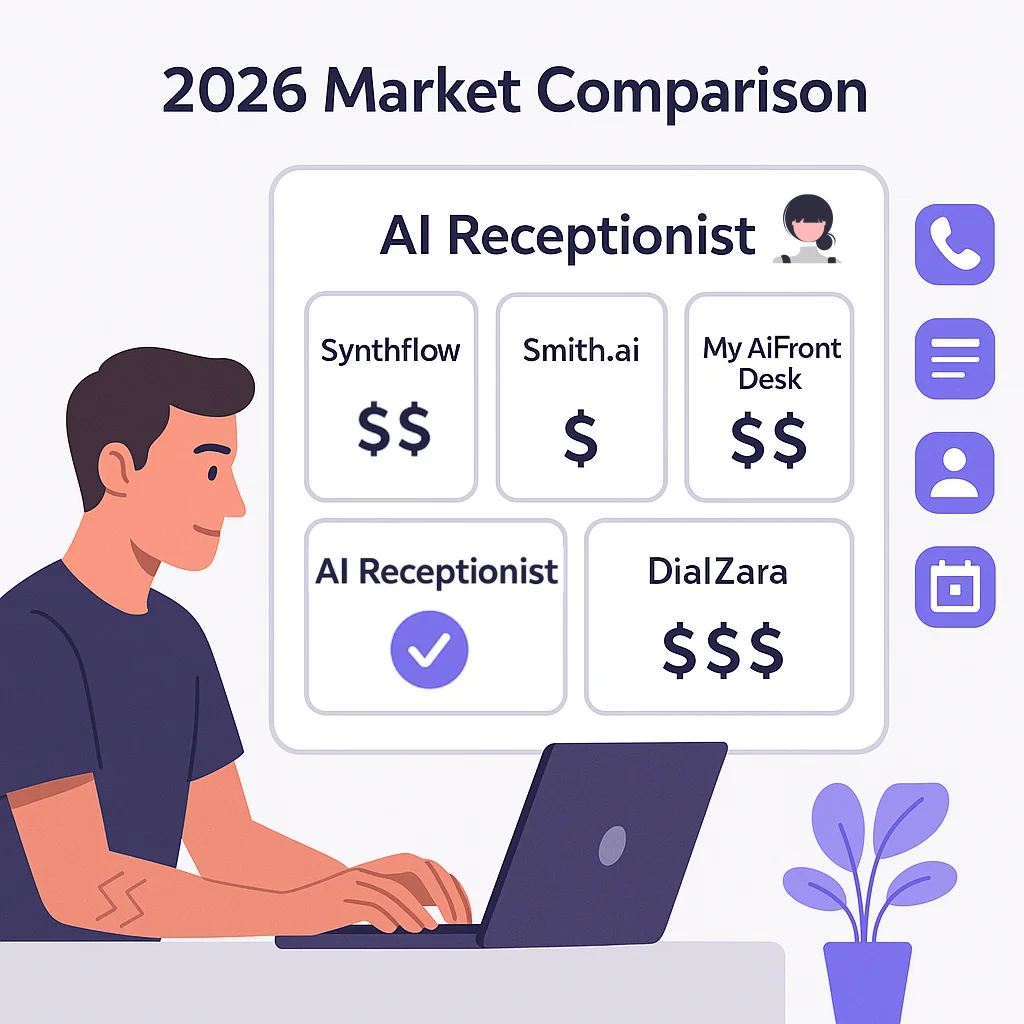
The trap has two parts. First, in a growing list of US states, you are legally required to tell callers they are talking to an AI. Second, in many states (and across the EU), you are required to disclose that the call is being recorded. Skipping either one can mean fines per call, private lawsuits, and in some cases statutory damages of thousands of dollars per violation. And most AI receptionist competitors - Dialzara being the clearest example - ship with no built-in disclosure at all.
This post explains exactly why a customizable, built-in disclaimer is one of the most important features your AI receptionist can have, and why our customers get it out of the box.
The US Legal Patchwork: A Fast-Moving Minefield
There is no single federal rule that says "your AI receptionist must identify itself" or "you must disclose recording on every call." Instead, you have a patchwork of state laws layered on top of older federal telecom rules. The result is a setup where compliance depends entirely on where your callers are - not just where your business is.
Federal Law: The Inbound Loophole That Lulls Vendors To Sleep
The Telephone Consumer Protection Act (TCPA) is the big federal stick, but it primarily targets outbound calls made with an artificial or prerecorded voice. Because an AI receptionist is answering inbound calls, most of the TCPA's strictest consent and disclosure rules do not directly apply. The FCC has proposed stricter AI disclosure rules, but those are not yet binding for inbound calls.
Vendors love this loophole. It is the foundation of "we do not need a disclaimer" thinking. Unfortunately, it is also wildly misleading because state law fills the gap with teeth.
Call Recording Consent: One-Party vs All-Party States
Most US states are one-party consent jurisdictions, meaning only one party on the call needs to know it is being recorded. In those states, the AI agent (operating on behalf of the business) technically counts as the consenting party.
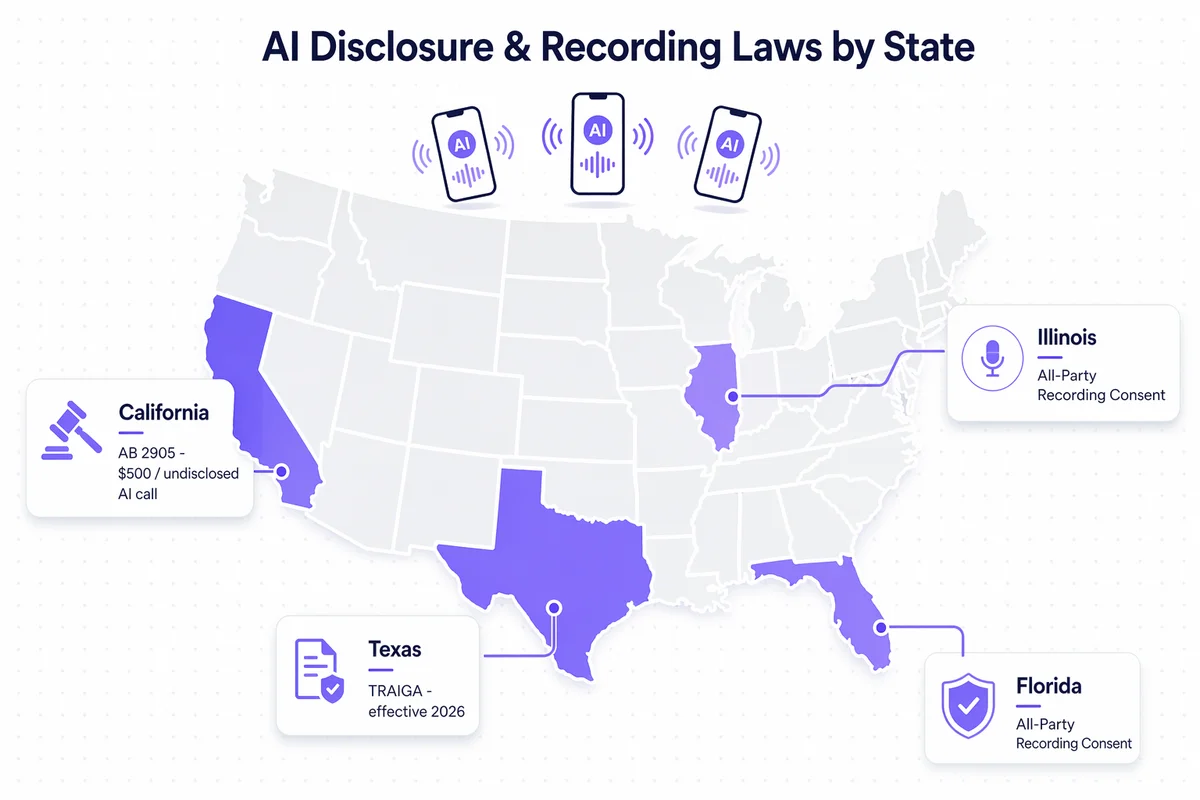
But around eleven states - including California, Florida, Illinois, Pennsylvania, and Washington - are all-party consent states. Every participant must be informed the call is being recorded. If your AI receptionist starts recording without telling the caller, your business is potentially committing a wiretapping violation. Statutory damages and even criminal penalties exist in some of these jurisdictions.
State AI Disclosure Mandates Are Already Live
The really new pressure is state-level AI disclosure law. A few examples that matter today:
- California AB 2905 (effective January 1, 2025) - Businesses using an AI virtual host on a phone call must disclose AI involvement, with fines of $500 per violation.
- Texas Responsible Artificial Intelligence Governance Act (TRAIGA) (effective January 1, 2026) - A comprehensive AI law that imposes disclosure obligations on entities deploying AI systems, including in healthcare and consumer-facing contexts.
- Utah, New York, New Jersey, Illinois - Active or pending bills with similar disclosure requirements.
Notice the trend. Three years ago none of this existed. Today there are real fines on the books in two of the largest US states. Three years from now, this will likely be standard nationwide.
The EU Goes Further: The Provider Bears the Burden
If you have any callers from the EU, the math changes again. Article 50 of the EU Artificial Intelligence Act (Regulation 2024/1689) requires that providers of AI systems intended to interact directly with people ensure those people are informed they are interacting with AI. The transparency obligations become enforceable in August 2026.
And under GDPR, a call recording is personal data. You need a lawful basis to record and a clear, specific purpose communicated up front. A vague "this call may be recorded for quality purposes" is often not enough.
Crucially, the EU framework places the duty on the AI provider, not just the deploying business. That is the opposite of how US-style terms of service tend to work, where vendors push every ounce of compliance liability onto the customer.
How Competitors Quietly Pass the Risk to You
Here is where the trap closes. Most AI receptionist platforms have written terms of service designed to insulate the vendor and leave you holding the bag. Dialzara is a clean example we have studied closely.
Their default agent setup ships with no AI disclosure and no call recording disclaimer. We have tested it directly. When a caller asks "Are you a person or an AI?" the default agent will deflect rather than answer. There is no built-in compliance language to start the call with.
Their terms of service then do the legal version of the same move:
- The "no warranty" section explicitly makes the customer responsible for output review.
- Liability is capped at the subscription fees the customer has paid - so a $39 a month subscription caps the vendor's exposure at $39 a month.
- Disputes are governed by Idaho law and must be litigated in Ada County, Boise.
- There are no representations or warranties around recording compliance or AI disclosure.
Their own "Inbound Agent Addendum" makes this explicit in plain language. Section 4.1 states directly that if you enable call recording, you are "solely responsible" for disclosure and consent:
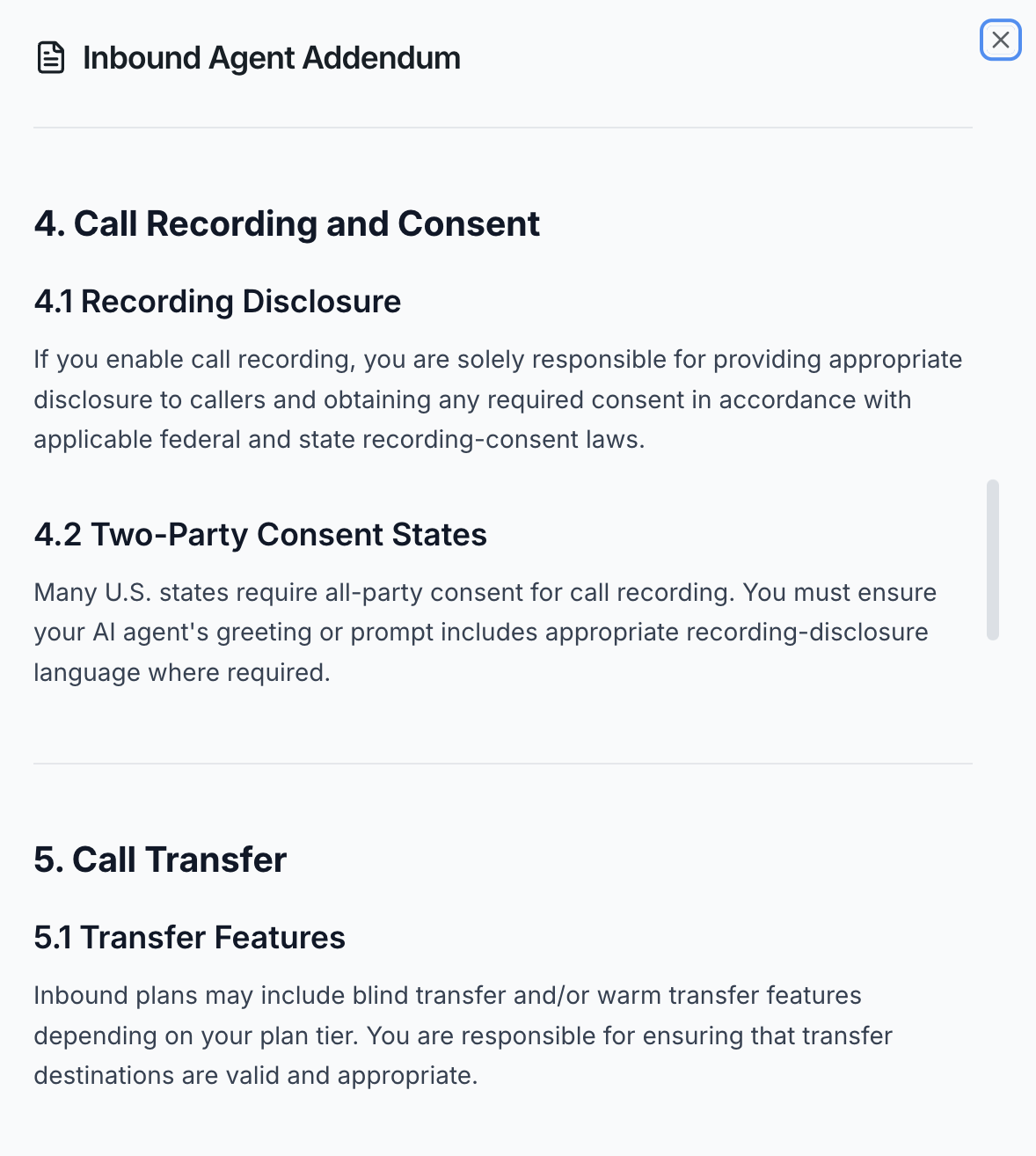
Translation: if a caller in California gets a $500 fine assessed against your dental office because your AI receptionist did not disclose itself, the vendor's worst-case exposure to you is roughly the price of a few months of service. The actual regulatory fine is one hundred percent your problem.
The Private Attorney General Risk
This is not a theoretical concern. WE HAVE ACTUALLY HAD THIS HAPPEN TO US (but we were already fully compliant)! There is already a well-established cottage industry of plaintiffs and small law firms that systematically test businesses for TCPA and state telecom violations, then send demand letters. The pattern is simple:
- Call businesses suspected of using AI receptionists.
- Record the call (legal in their one-party consent state).
- Document the lack of AI or recording disclosure.
- Send a demand letter offering to settle for a few thousand dollars.
- Repeat at scale.
In a state with $500 per violation fines, settling for $2,000 to make the lawsuit go away looks tempting. Multiply by every undisclosed call, and the math gets ugly fast for a small business.
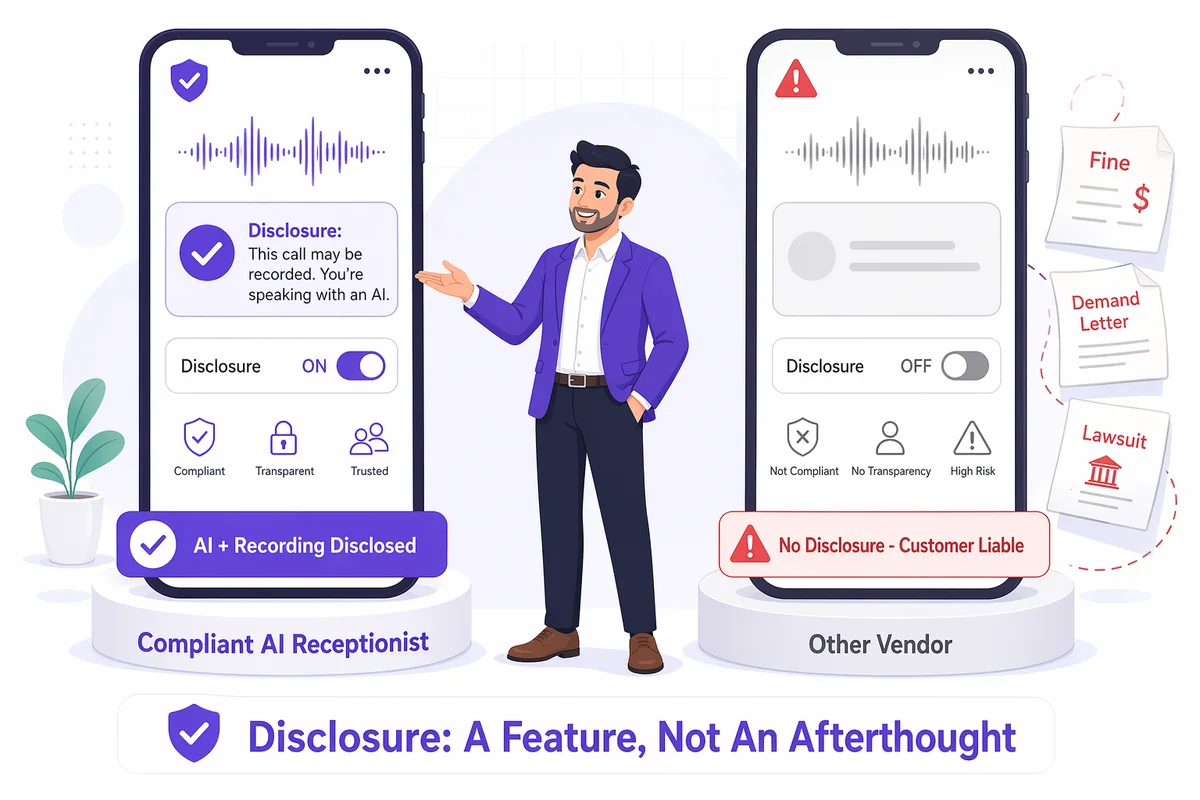
Our Approach: Compliance Built In, Not Bolted On
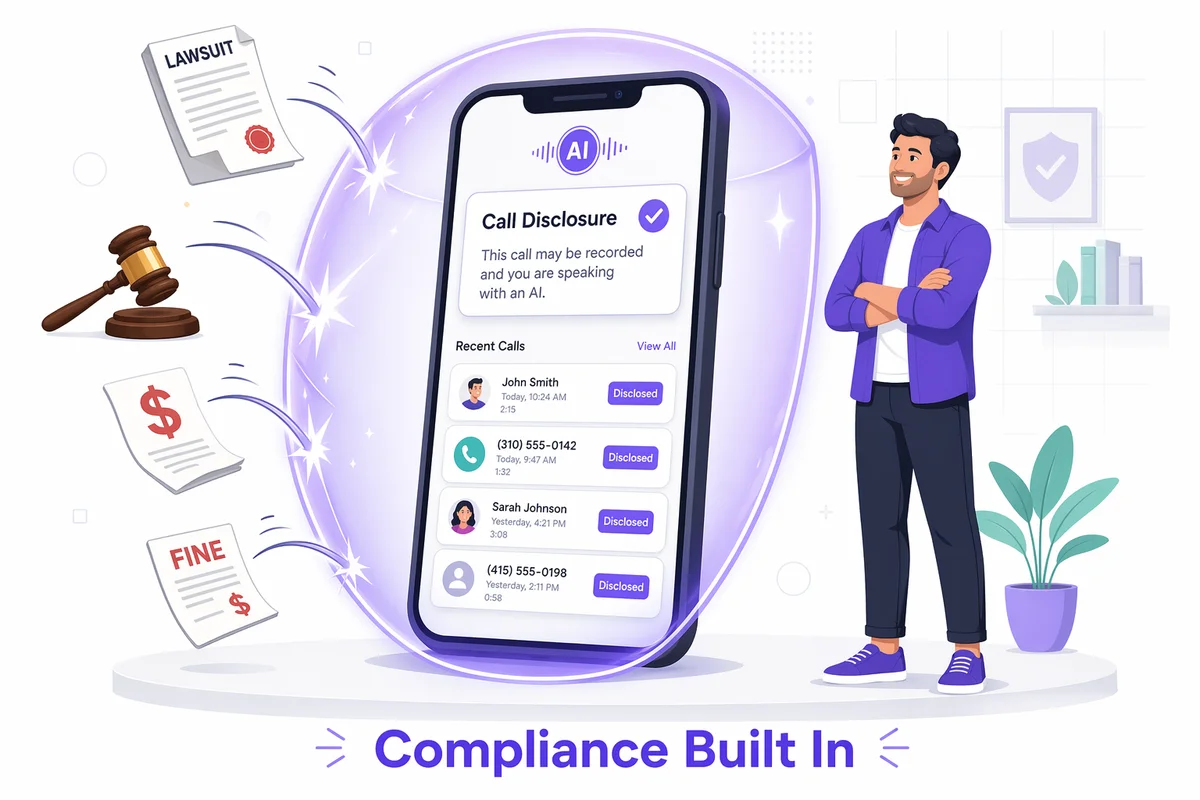
Don't be caught holding the bag! We built our AI receptionist with this legal landscape in mind from day one.
We rolled out custom call disclaimers months ago because we believe this is exactly the kind of thing a serious AI receptionist platform owes its customers. The feature is simple but the protection it provides is large.
A Default Disclosure That Just Works
Every new AI Receptionist account starts with a sensible default disclosure. Out of the box, the AI tells callers the call may be recorded and that they are speaking with an AI assistant. You do not have to read a legal blog post (like this one) and reverse-engineer compliance language. We handle the baseline for you.
A Personalized Disclaimer Text Box You Can Edit
Inside the dashboard you will find a clearly labeled "Personalized Disclaimer Text" field. You can adjust the wording to match your brand voice, your jurisdiction, or your industry's specific requirements. A medical practice can add HIPAA-aware language. A California business can be more explicit about all-party consent. A multilingual business can adjust the phrasing.
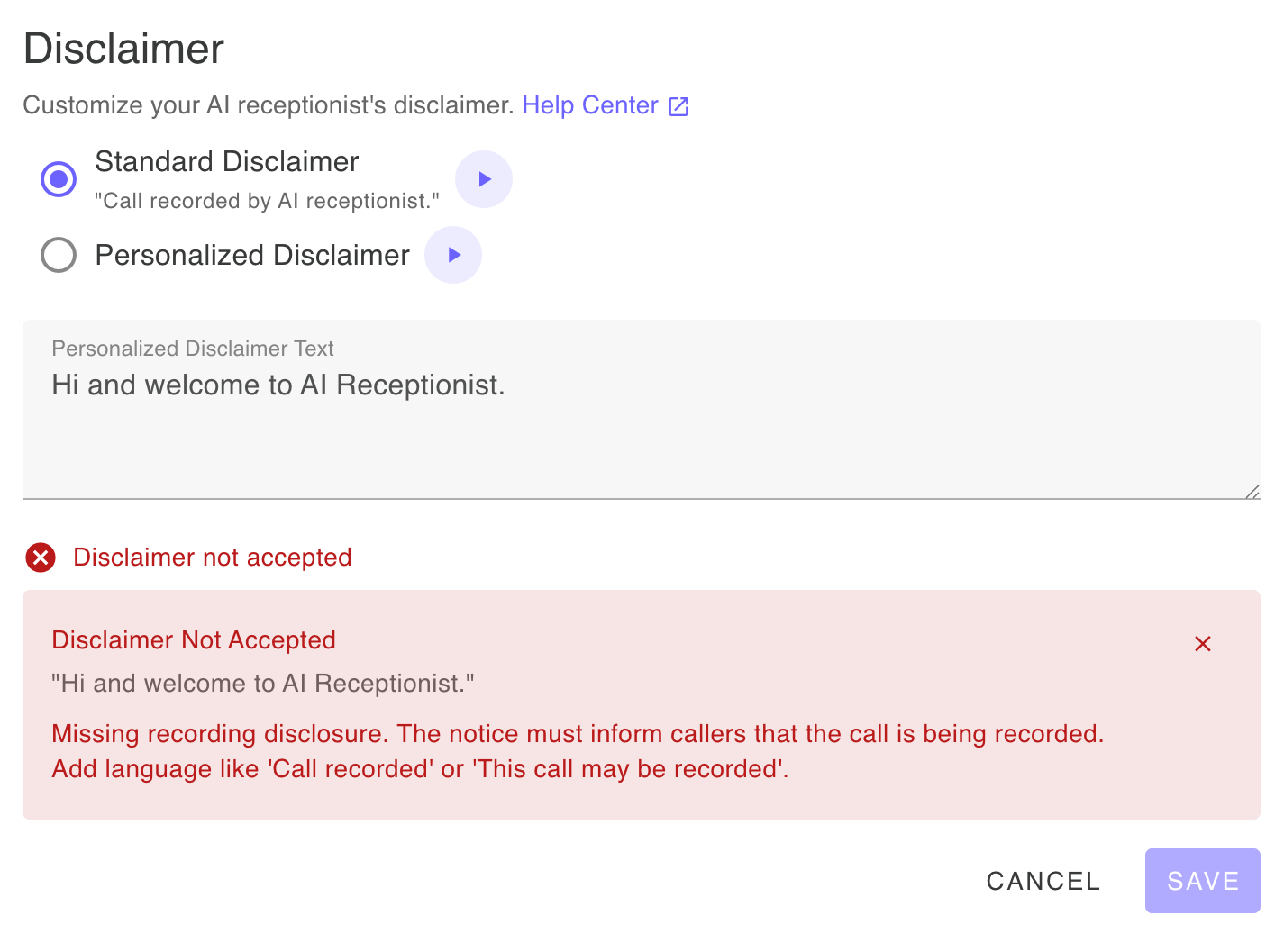
We even validate the disclaimer text for you. If you try to save a custom disclaimer that omits the required recording disclosure, the system flags it immediately with a clear explanation of what is missing:
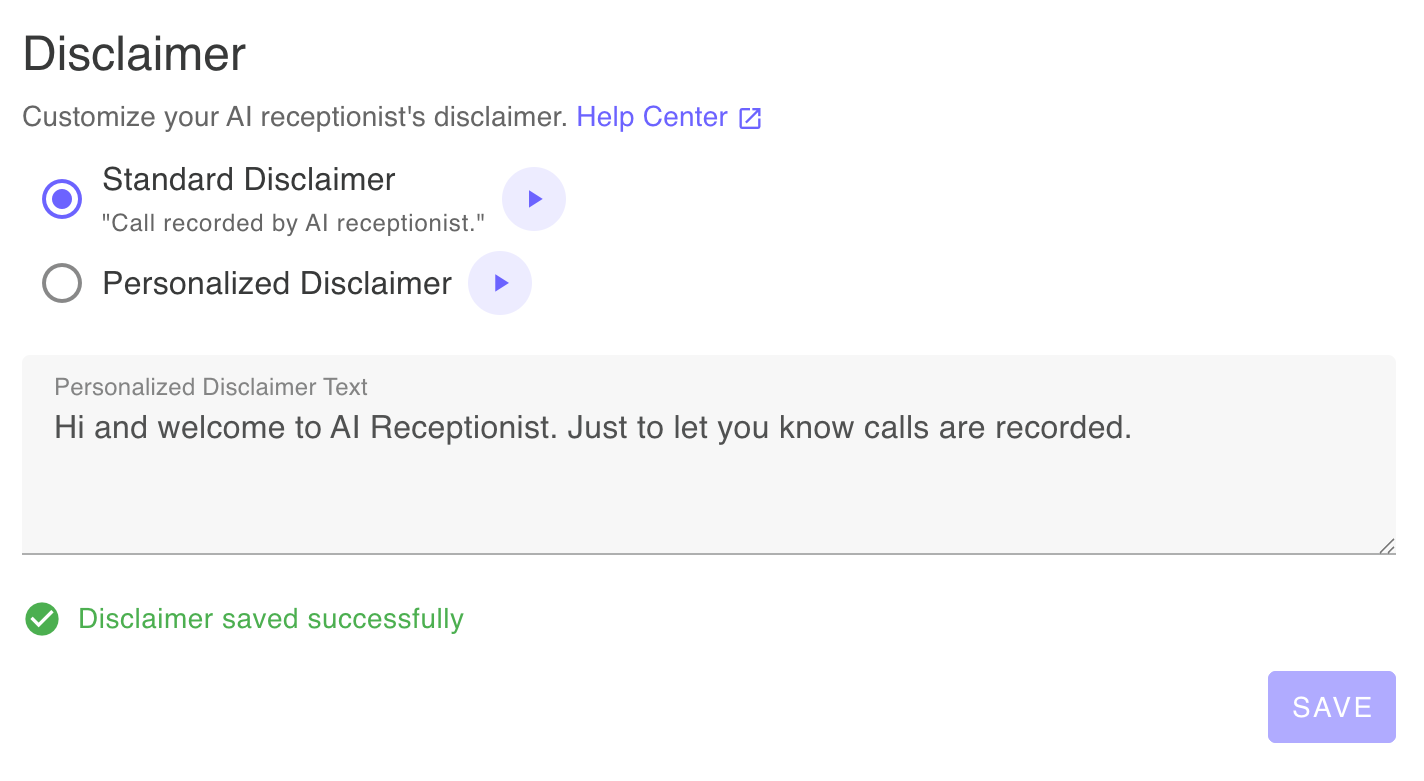
Once the disclosure language is present - something as simple as "Just to let you know, calls are recorded" - the system accepts it and saves:
Customize the Wording in Your Own Words
You are not stuck with a generic corporate script. Just type the disclaimer text you want - in plain, natural language - and your AI receptionist reads it aloud in the voice you have already chosen for your account. Something like:
"Hi, this is the AI assistant for Oakdale Dental. Just to let you know, this call may be recorded. We use AI to help us take great care of every patient. If you prefer not to be recorded, just let me know or hang up."
It satisfies the legal requirement, sounds natural in your chosen AI voice, and keeps the tone consistent with the rest of the call experience.
Greeting and Disclosure as Separate, Auditable Pieces
The greeting and the disclosure are configured as separate fields in our UI. That separation matters because it means the disclosure is always present, regardless of how creatively a customer customizes their greeting. It is hard to accidentally remove your own legal protection.
There is also a subtler benefit: the disclosure plays before the conversational AI takes over. Once the AI is in conversation mode, an impatient caller can interrupt it and it will stop talking as designed - that is good UX. But it means a determined caller could cut off a disclosure buried inside the greeting. By keeping the disclosure as a separate, leading element, we ensure every caller hears it before any interaction begins. You cannot interrupt something that has already finished playing. And remember those enterprising attornies fishing for violations and settlements? If your disclosure is so fragile that all they have to do is speak over the AI, then what good is it?
The Right Thing to Do, Not Just the Legal Thing
All of this discussion about fines and liability is important, but it misses a more fundamental point: disclosing that a caller is speaking to AI is the right thing to do, regardless of what any law says.
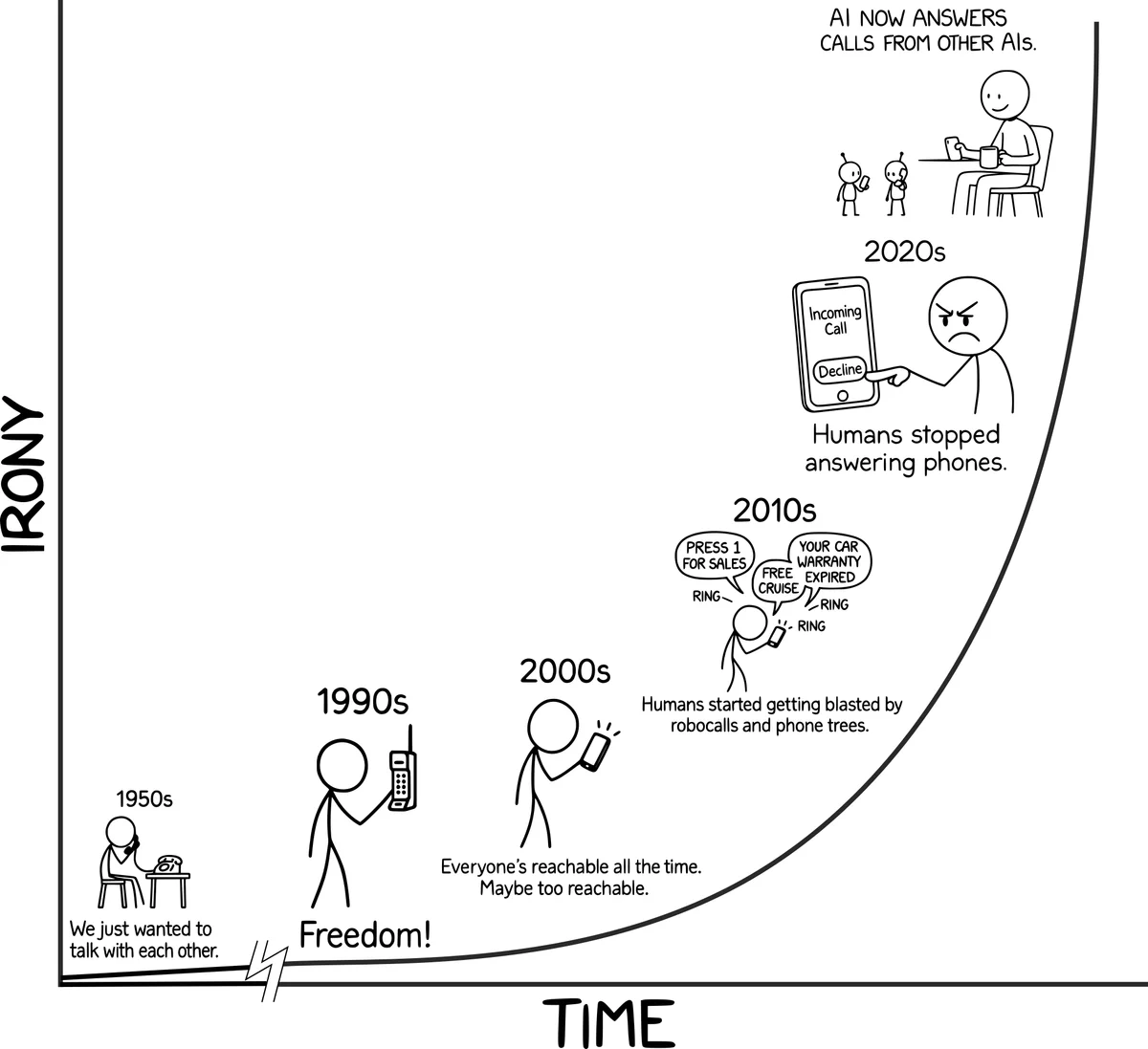
Some people genuinely do not want to engage with AI. They may have had years of frustrating experiences with robotic phone trees and scripted bots that could not actually help them. They may have personal, cultural, or philosophical reasons for preferring human contact. Whatever the reason, they deserve to know - before the conversation begins - who they are actually talking to. Tricking them into a conversation they would have opted out of is not a feature. It is a failure of respect.
Modern voice AI has become genuinely good. A well-configured AI receptionist today is natural, helpful, and in many cases more patient and attentive than a rushed human handling their fifteenth call of the hour. The goal is not to disguise that - it is to demonstrate it. When someone who dislikes AI calls a line powered by AI Receptionist and has a smooth, helpful experience, that is a small piece of the work of changing minds. You cannot do that work by hiding what you are.
We think AI vendors who skip the disclosure are betting on the wrong thing. They are betting that callers will not notice, or will not care, or will not complain. We would rather build something worth being transparent about.
Why Built-In Disclaimers Are A Concrete Sales Advantage
If you are choosing between AI receptionist vendors right now, here is a question worth asking the salesperson on the demo call:
"Out of the box, does your default agent tell callers they are speaking with AI and that the call may be recorded? And does your contract take any responsibility for that disclosure being legally adequate?"
The honest answer from most competitors is "no, that is your job." The honest answer from us is "yes, it is on by default and you can customize the wording."
That difference is not just a feature comparison. It is the difference between a vendor that quietly sets you up for a state regulator letter, and a partner that ships compliance as a first-class part of the product.
Practical Recommendations for Any Business Using an AI Phone Agent
Whether you stay with us or you are evaluating other vendors, here is what we would tell any small business owner deploying an AI receptionist in 2026:
- Always disclose AI on the call. Even if your state does not require it yet, it likely will soon, and customers respond better to transparency than to discovery.
- Always disclose call recording. Treat every call as if it might be from an all-party consent state.
- Put the disclosure in the first 30 seconds. Some statutes (like Texas's) explicitly require early disclosure.
- Keep the wording simple and human. "This call may be recorded and you are speaking with an AI assistant" is enough for most jurisdictions.
- Read your vendor's terms of service. Look for the liability cap and the language around compliance responsibility. If it is all on you, plan accordingly.
The Bottom Line
An AI receptionist disclaimer is not legal theater. It is the cheap, easy, well-understood fix to a problem that is already costing other businesses real money. Vendors that ship without one are betting that their customers will never get caught - and contractually arranging things so that when their customers do get caught, it is not the vendor's problem.
We took a different bet. We think the right thing for a phone AI platform to do is bake compliance into the default experience and let business owners customize it from there. It costs us nothing to be on the right side of this. It can cost you a lot if your vendor is not.
If you would like to see how our disclosure setup works, you can sign up for a free trial at ai-receptionist.com and configure your AI receptionist's greeting and disclaimer in minutes. And if you are stuck on a competitor that leaves you legally exposed, we are happy to help you migrate.
If you are also comparing features and pricing between vendors, our AI Receptionist comparison pages cover the major players side by side - including a detailed AI Receptionist vs. Dialzara breakdown.
Stay safe out there. Your phone line is more regulated than you think.
Legal References
- FCC Ruling on AI-Generated Voices (USA) - February 2024 ruling confirming AI-generated voices fall under the TCPA's restrictions on "artificial or prerecorded voice" calls. IR Global: AI Meets TCPA: Navigating Business Compliance Risks in Phone Communications
- All-Party Call Recording Consent States (USA) - Guide to state-by-state recording consent rules including California, Florida, Illinois, and Pennsylvania. Rev: Phone Call Recording Laws: What You Need to Know
- California AB 2905: AI Disclosure Law (USA) - Effective January 1, 2025. Requires AI virtual hosts to disclose AI involvement, $500 per violation. Hostie AI: State-by-State Call-Recording Compliance for AI Virtual Hosts in 2025
- Texas TRAIGA: AI Governance Act (USA) - Effective January 1, 2026. Imposes AI disclosure duties including requirements to inform individuals when interacting with AI. Holland & Knight: Texas Enacts Sweeping AI Law: Disclosure, Consent, and Compliance Requirements Take Effect in 2026
- EU AI Act Article 50 (EU) - Requires providers of AI systems to ensure natural persons are informed they are interacting with AI. Transparency obligations enforceable August 2026. Wisemen: What transparency obligations apply to AI use?